Most people pick an accountant after one quick phone call. They chat for a few minutes, hear a price, and say yes.
That first call is your best chance to learn what working with this person will be like. It's a shame to spend it on small talk.
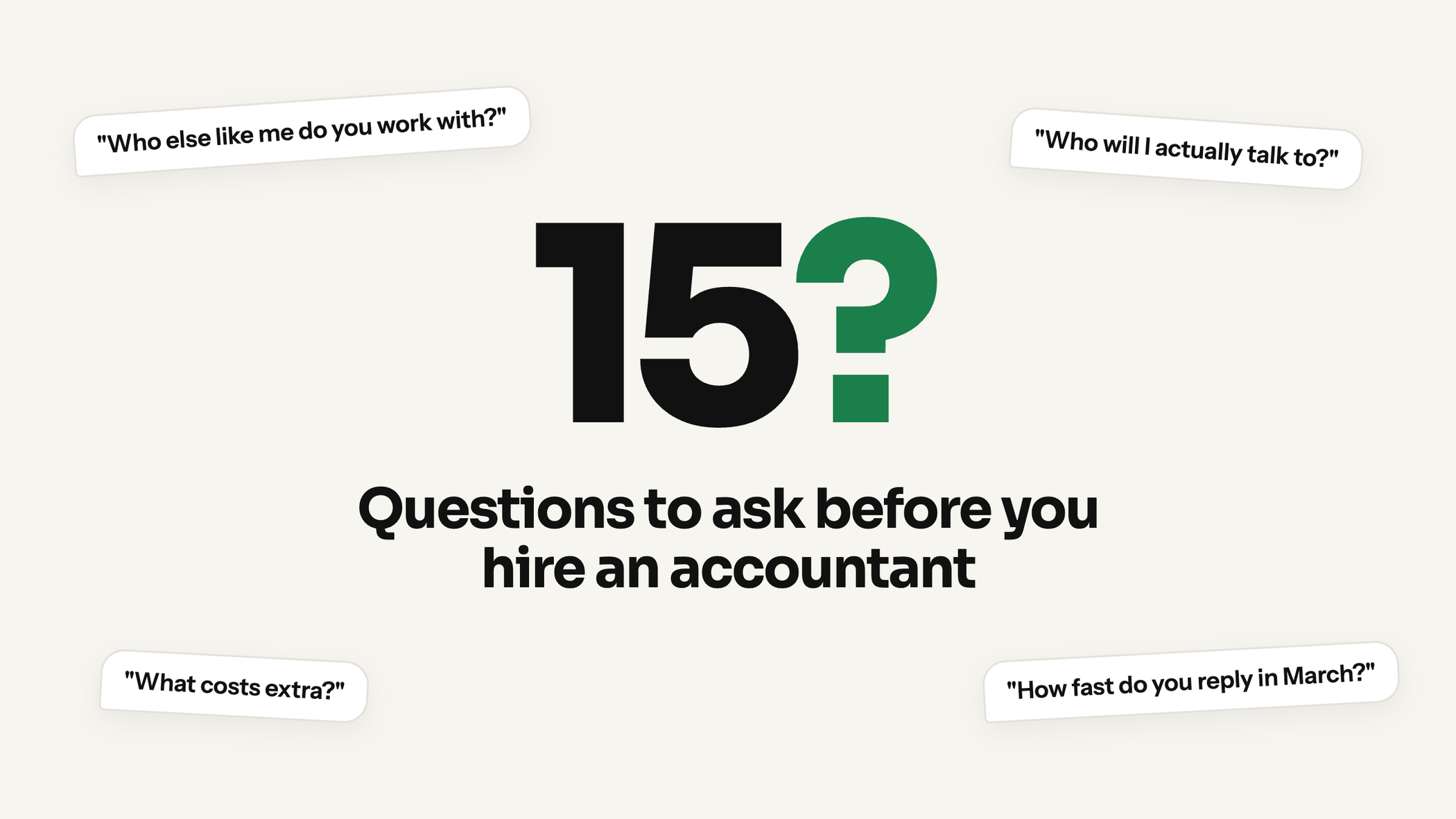
This list fixes that. It has 15 questions in five groups. Each one comes with a short note on what a good answer sounds like.
You don't need to ask all 15. Pick the five that matter most to you. Ask those same five on every call. Then you can compare firms side by side.
Start with the fit questions. They rule out the wrong firms fastest.
Fit questions: does the accountant know businesses like yours?
1. "Who else like me do you work with?"
This is the most useful question on the list.
Say you own a restaurant. An accountant who already works with ten restaurants knows the usual mistakes. They know what to watch for. An accountant who has never had a restaurant client is learning on your money.
A good answer sounds like: a real description of clients like you. For example, "About a third of our clients are trades businesses with five to twenty employees." A fuzzy "we work with all kinds of businesses" is a weak answer.
2. "What kind of client is not a good fit for you?"
Good firms know who they're not for. And they'll tell you.
That's a good sign. It means they've thought about where they do their best work.
A good answer sounds like: a clear line. For example, "We don't do audits," or "We're not the right fit if you only want a tax return once a year."
3. "What would you want to see from me before our first real meeting?"
This shows you how they work.
A good firm will ask for things like last year's tax return and your books. (Your "books" are the records of the money coming in and going out of your business.) That means they want to understand your situation before they give advice.
A good answer sounds like: a short, clear list. If they don't ask you for anything, take note.
Once you know a firm fits, find out who inside it will actually do the work.
People questions: who at the firm will do the work?
4. "Who will I actually talk to?"
The person on the sales call is not always the person who does your work.
In lots of firms, a senior person (often called a partner) does the first call. Then a staff accountant does the day-to-day work. That's normal. It only becomes a problem if you find out after your first email goes unanswered.
A good answer sounds like: a name, a job title, and how to reach them. For example, "You'll work with Maria, a senior accountant. I check everything before it goes out."
5. "What credentials does the person doing my return hold?"
A credential is a title someone had to earn, like CPA. It matters most when something goes wrong with the IRS.
Here is what the letters mean, in plain words:
- CPA means Certified Public Accountant. CPAs pass a hard exam and get a license from their state.
- EA means enrolled agent. EAs are tax experts. They get their license from the IRS.
- Attorney means a lawyer.
According to the IRS, enrolled agents, CPAs and attorneys have unlimited representation rights. "Representation" means they can deal with the IRS for you. That covers audits (when the IRS checks your return), money you owe (collections), and appeals.
Other preparers have fewer rights:
- A preparer with only a PTIN can't represent you before the IRS at all. A PTIN is the ID number every paid preparer must have. It isn't a credential.
- Preparers in the IRS Annual Filing Season Program have limited rights. They can only speak for you about returns they prepared and signed, and only with certain IRS staff.
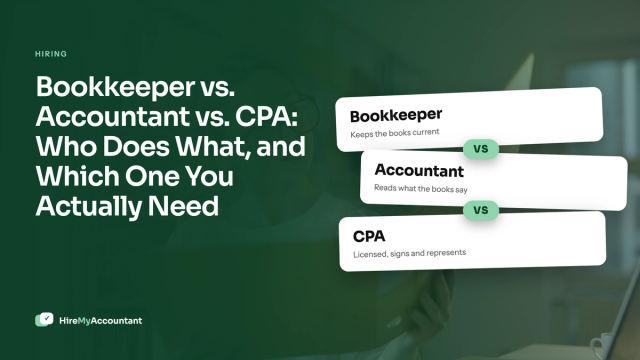
Still confused by the titles? Our guide to bookkeepers, accountants and CPAs explains the difference.
A good answer sounds like: the exact credential, said with no hesitation. You can look it up in the IRS directory of preparers with credentials.
6. "Will you sign my return?"
By law, anyone you pay to do your taxes has to sign the return and include their preparer tax identification number (PTIN).
If a preparer asks you to sign it as if you did it yourself, that's a big red flag. Walk away.
A good answer sounds like: "Yes, always."
Now you know who does the work. Next comes money, which is where most surprises happen later.
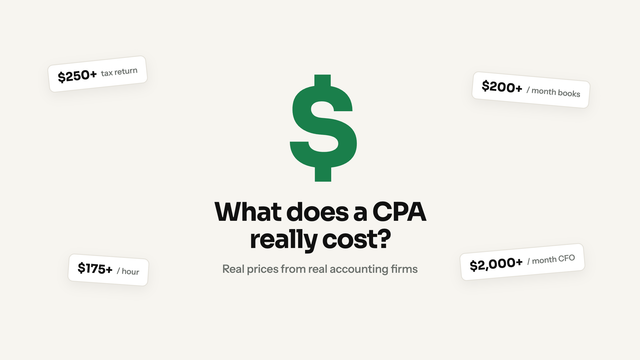
Price questions to ask an accountant
7. "What's included, and what costs extra?"
Get the price before any work starts. Get it in writing.
Then ask what is not included. Common extras are:
- Catch-up bookkeeping. This means fixing records that have fallen behind.
- Amended returns. This means fixing a return that was already filed.
- Extra state returns. You may need one for each state you earn money in.
- Answering a letter from the IRS or your state.
A good answer sounds like: a written list of what's included, with prices for the common extras. "We'll figure it out as we go" usually leads to surprise bills.
8. "How do you charge: flat fee, hourly or monthly?"
There's no single right way.
- A monthly fee works well if you want regular help all year.
- An hourly fee can work for a small, one-time job.
- A flat fee means one set price for a set job.
What matters is that you understand it before you sign.
One kind of fee to avoid comes straight from the IRS: preparers who base their fees on a percentage of your refund. That rewards a bigger refund, not a correct one.
A good answer sounds like: a clear way of charging, plus a real price range for someone like you.
9. "What happens to the price if my business grows?"
When a business grows, there's more to track. You may add workers, more sales or more states. Ask how the price changes when that happens. Then a great year won't come with a surprise bill.
A good answer sounds like: a clear trigger. For example, "We look at the fee again if you add payroll or pass a certain amount of sales."
A fair price only helps if the firm picks up when you need it. That's the next group.
Availability questions: will your accountant be there?
10. "How fast do you reply in March?"
Every accountant answers fast in July. That's the quiet season.
The real test is the weeks before a tax deadline. That's when every client wants something at once.
A good answer sounds like: a real reply time, such as "within one business day, even in tax season." Bonus points for a backup person to contact if your main person is busy.
11. "Will I hear from you outside tax season?"
The IRS itself says to ask whether a preparer will be around for months or years after filing. You may have questions later.
The best accountants go further. They reach out before you make a big money decision, not after.
A good answer sounds like: a plan. "We meet every three months, and we check in before the end of the year to plan" is much better than "Call us any time."
12. "How do you want me to send you documents and questions?"
One simple system saves time for both of you. An online portal, a shared folder or one email address all work. A mix of texts, emails and paper doesn't.
A good answer sounds like: one system, explained in one sentence.
The last group is the one most people skip, because it's about the bad days.
Questions to ask about mistakes and IRS letters
13. "What happens if you make a mistake on my return?"
This question makes some accountants squirm. That's exactly why you should ask it.
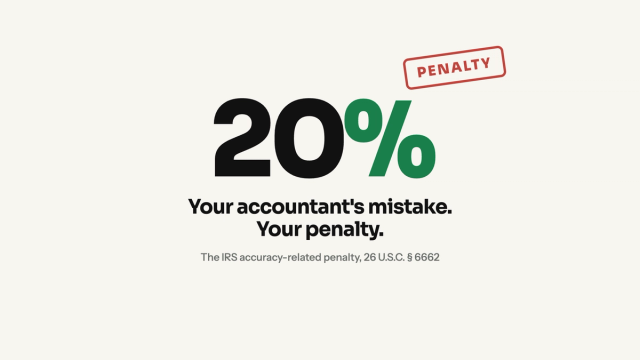
Here's what surprises people. The IRS says you're ultimately accountable for the accuracy of every item reported on your return. That's true even when a professional did it for you. So if your accountant makes a mistake, the IRS still comes to you. We explain what that can cost in the real cost of picking the wrong accountant.
A good answer sounds like: an honest plan. For example, "If we make a mistake, we fix it for free and help you answer any letter it causes."
14. "What happens if I get a letter from the IRS?"
IRS letters happen, even when you did nothing wrong. You want to know who handles them, and whether it costs extra.
A good answer sounds like: "Send it to us. We'll tell you what it means and whether you need to do anything." Also ask if dealing with the IRS for you is included in the price or billed on top.
15. "If we part ways, how do I get my files?"
It's much easier to ask this at the start than at the end. Your records, returns and books belong to you. Getting them back should be easy.
A good answer sounds like: "Your files are yours. We'll send everything within a week of you asking."
That's a lot of questions for one call. Here's how to use them.
How to use these questions before you hire
Write down each firm's answers while you're on the call. Then compare the firms on the same questions.
The best pick is rarely the cheapest price. It's usually the firm that gave clear, honest answers, even to the awkward questions.
Want a head start? Every vetted firm on HireMyAccountant has already been checked. Before a firm gets the badge, a person reviews what the firm publishes and what its clients say. You can see how vetting works, or search vetted accountants by industry and city.