You know that quiet moment in March when you look at your tax return and think, I wonder if this person actually knows what they're doing.
That thought is worth following. What most people frame as a tax problem is usually a business problem. It shows up in cash flow gaps, legal exposure, growth decisions that never get made, and a low-grade financial anxiety that follows them home. The tax return is just where the damage surfaces. It is rarely where it starts.
The Money You Can See Is the Smallest Problem
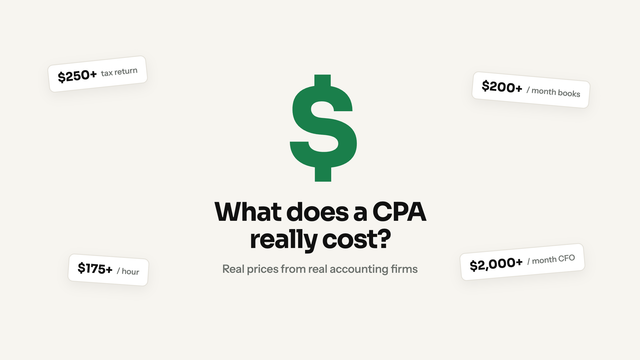
Most people evaluate an accountant on one number: what they saved on the return versus what they charged.
That math is incomplete.
The errors that cost the most are rarely exotic. They are basic bookkeeping mistakes that nobody catches. A competent accountant finds them before they compound. A less competent one lets them stack up quietly until a lender, a buyer or the IRS finds them for you.
The IRS Sends the Penalty to You, Not Your Accountant
Here's a detail that rarely makes it into the engagement letter.
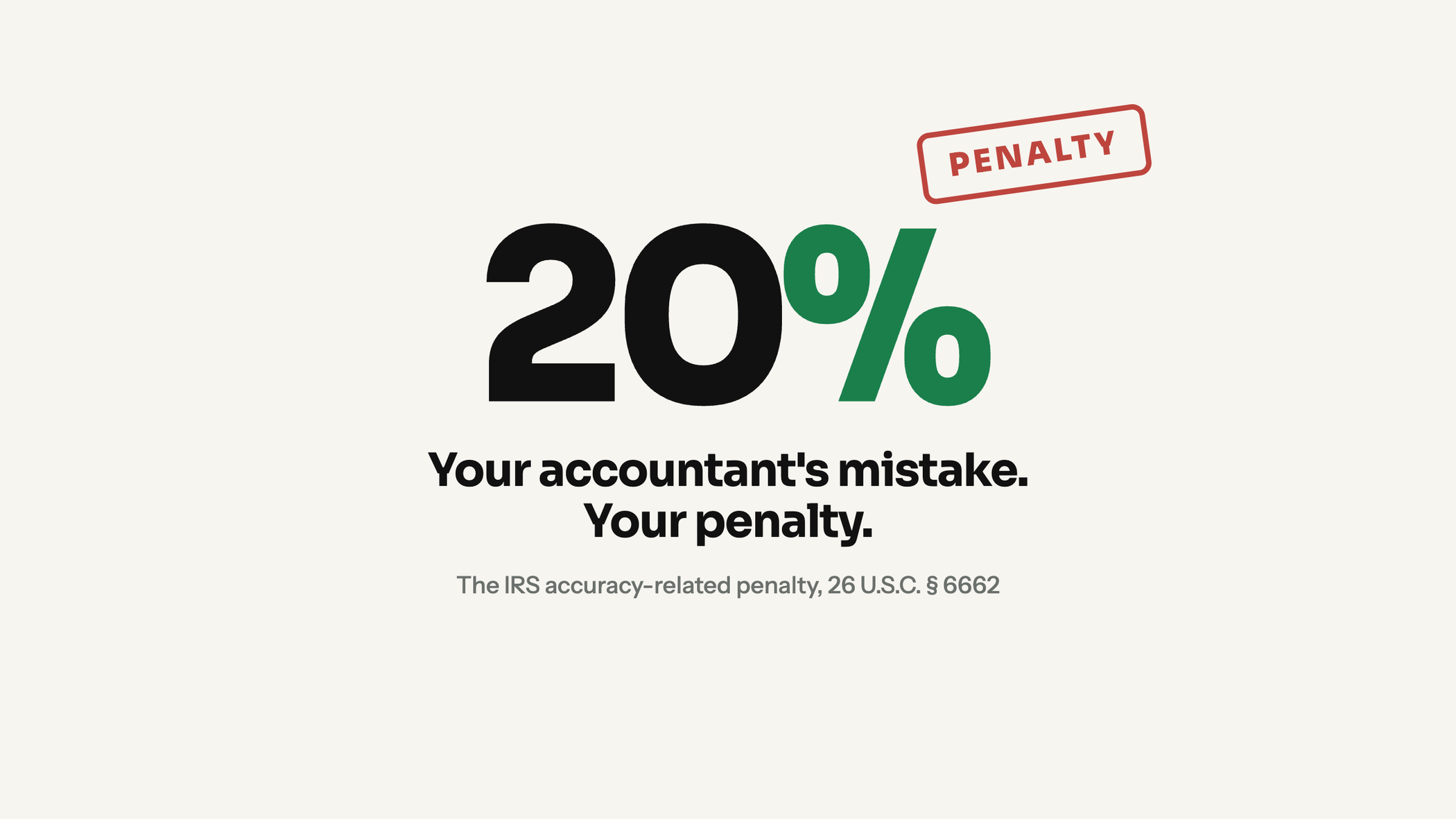
The IRS is clear on who answers for a mistake. In its own words, "Although the tax return preparer always signs the return, you're ultimately accountable for the accuracy of every item reported on your return" (IRS Topic 254).
The penalty is not small. The accuracy-related penalty is 20% of the underpayment, and it rises to 40% for gross valuation misstatements (26 U.S.C. § 6662).
Fighting it in court is a long shot. The National Taxpayer Advocate reviewed 178 accuracy-related penalty cases decided between June 2012 and May 2013. The IRS won in full in 139 of them, or 78% (2013 Annual Report to Congress).
Your accountant's competence is your legal liability. That changes the hiring decision considerably.
Cash Flow Is Where Bad Advice Becomes Fatal
A tax penalty stings. A cash flow crisis can end a business.
Survival is already hard. Only 34.7% of U.S. business establishments born in March 2013 were still operating in March 2023 (Bureau of Labor Statistics).
Businesses rarely die from one bad tax year. They die from months of not knowing their real numbers.
An accountant who only shows up in April gives you a rearview mirror. What you need is a windshield: someone flagging the cash crunch in October, when you still have time to do something about it.
Opportunity Cost: The Invoice That Never Arrives
This is commonly overlooked, and it's the most expensive category on the list.
Many of the worst costs never appear on a financial statement. Think of forgone revenue, lost time, and the expansion you delayed because you weren't sure you could afford it, when the numbers actually said you could.
Consider what a weak accounting relationship quietly takes from you:
- Missed timing. Equipment purchases, entity restructuring and retirement contributions all have windows. A reactive accountant tells you about them after they close.
- Static capital. McKinsey found that a third of companies reallocate only about 1% of their capital from year to year. Companies that reallocate actively earn higher shareholder returns than the slow movers (McKinsey). Without strategic financial guidance, you drift into the slow group.
- Blocked growth. In a Relay survey, 62% of small business owners said cash flow issues hurt their business in the past year, through missed growth opportunities, delayed projects or reduced staff hours (Relay).
None of these show up as a line item. All of them show up in where your business is five years from now.
The Cost That Lives in Your Head
Trust in your accountant is a working asset. When it's there, you stop auditing their work in your head at 11pm. You make calls faster. You take one thing completely off your plate.
Plenty of owners don't have that. In a 2024 Xero survey of 1,021 U.S. small business owners, half said they face financial challenges in their business because of a lack of financial literacy (Xero). When you can't fully rely on your advisor, you end up as the backstop for a subject you never signed up to manage.
Financial confidence is a competitive advantage. Business owners who have it move. The ones who don't spend their energy managing doubt instead of decisions.
Partnership Beats Transaction, Every Time
The accounting relationship has changed. Business owners increasingly want someone in the room year-round, not a firm that surfaces in spring with a summary.
The call you want from your accountant is the one that comes in September, unprompted, with a specific idea that saves you money before the window closes. That's the version worth paying for.
The technical work is largely the same across the field. What separates a good accountant from a costly one is what they do between filings: the proactive question, the honest pushback, the conversation about where your capital should actually go.
How to Actually Evaluate an Accountant
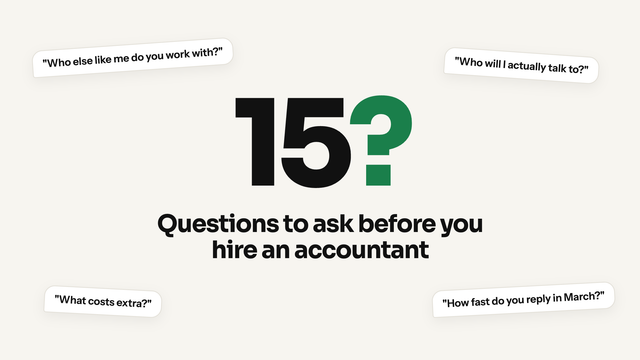
Fee comparison is the wrong first filter. Ask these instead:
- Do they contact you outside tax season with planning ideas, or only respond when you reach out first?
- Can they explain your cash flow position in plain English, right now, without preparing a report?
- Do they know your industry well enough to benchmark you against it?
- Will they push back on a bad financial decision, or just file whatever you hand them?
- What happens when they make a mistake? Ask directly. The answer tells you how they'll handle your penalty exposure.
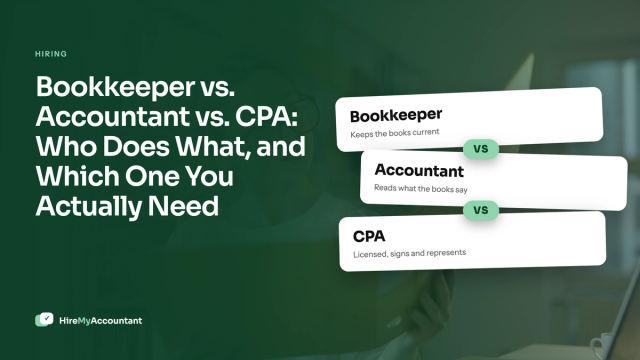
A useful framing question: how does this person contribute to my financial strategy beyond basic compliance? If the honest answer is "they don't," you've found a bookkeeper priced like an advisor.
The Bottom Line
The cheapest accountant often becomes the most expensive one you'll ever hire. The costs just arrive later under different names: penalties, missed windows, stalled growth, and the low hum of financial anxiety that follows you home.
Take the selection seriously. Compare candidates on strategy, responsiveness and trust before you compare them on price.
Your future self, the one reviewing a clean return with no doubt in the back of their mind, will count it as the best financial decision you made all year.
Ready to find your accounting partner? Search vetted accountants by industry and city.